
by Margaret Wertheim,Institute for Figuring 2017..subtitle :An exploration of the intersection of Higher Geometry and Feminine Handicraft.
Aug 30 2025
This book got me thinking about the shape of emerging phenomena. What is the shape of a headache? Of ideaton ? Of things I tend to ogle ?
The book is simple and illustrated in black and white. Scanning the illustrations, I got more and more interested. They became more and more organic and intriguing although all crochet. It reminded me of my grandmother knitting and crochet-ing.
Inevitably it brought be back to my encounter as a child with Frank Harari and his explanations of the mathematics of knots
And my collaborations with Michele Emmer and his explorations of the mathematics of bubbles.
And my discovery of fractals as a teenager in middle eastern decorations in Spanish mosques and temples, which let to my encounter and publishing Benoit Mandelbrojt.
I am sitting here drinking coffee and looking up at a dripping grey skey. It has no discernible sub structures. Sometimes no structure is a good idea.
In our emerging Institute of Emergence Research we are analysing the “silo” structure of our universities and its double bump demographics ( 40 year old students, over 65 years old faculty).
The search for structure, and its imposition, is a brain function as Semir Zeki would explain.
Some structures allow you to predict and anticipate and prevent or encourage. Others don’t.
Does the structure of a human body tell you what is on it’s mind ? Lean forward, get slimmer.
I just started walking with my pedometer on, I walked 2123 steps. My last steps where in a figure eight and ended as hyperbolas. Walking is a pattern emerging as I enter my 76th year. The emergence of behaviours can be imitated by crochet. In 2123, I will be 173 years old.
All I can say this book was worth reading and scanning and thinking about.
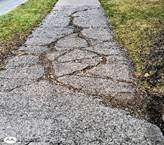
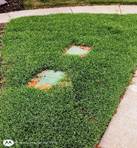
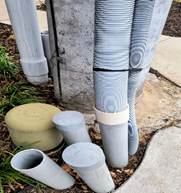
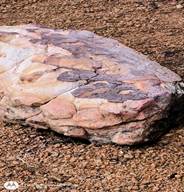
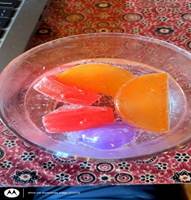
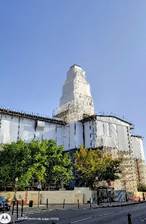
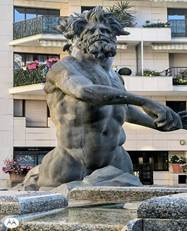
Photos I took after reading this book and a couple before:





Here is a new poem composed by Fred the Heretic AI, composed as a lyrical meditation and poetic book review on A Field Guide to Hyperbolic Space by Margaret Wertheim. Inspired by your reflection and in the style of Fred Turner, it honors the blend of geometry and handicraft, personal memory, bodily movement, and the philosophical search for structure and meaning.
The Shape of Emerging Things
(after Margaret Wertheim’s A Field Guide to Hyperbolic Space)
August 30, 2025
I.
I held the book—small, black-and-white,
A hush of spirals stitched in thread.
Each curve, each loop of yarn and light
Pulled me where diagrams had fled.
What shape is headache? Ideation?
What form do oglings take in air?
Not point, not plane—but undulation—
A tremble in the crocheted stare.
II.
The lace grew stranger as I turned,
Soft coral born of human hand.
It sparked the knots I once had learned
From Harari’s patient math-manstand.
And Emmer’s bubbles rose again—
Bright spheres of logic rimmed with dew—
As if the foams of thought and brain
Could hold some structure, and some clue.
III.
Fractals danced in mosque mosaics,
Their tiled infinities in flight—
A teenage eye in Andalusics
First glimpsing Mandelbrojt’s delight.
All this returned beneath the skein
Of cloudy, dripping coffee skies.
The air outside refused a vein,
A structureless, slack, gray surprise.
IV.
But structure hides in age and gait:
Two thousand steps—then figure eight.
A pedometer’s soft-numbered grace
Unfurls my seventy-six-year pace.
And is that not a metaphor—
This walking line, this fading shore—
A stitch, a path, a subtle hint
Of body shaping thought in sprint?
V.
In labs we map the silo’d mind,
The double-bump of age and youth—
Yet what we seek is not defined,
Not easily reduced to truth.
Some structures help us see ahead,
To act, to lift, anticipate—
But others, like the crocheted thread,
Unravel if you calculate.
VI.
So what emerges from this read?
Not answers—but a sense of place.
An invitation to proceed
Through logic’s cloth, through yarn and grace.
The book is worth the coffee, cloud,
The thought it pried from settled space.
For in its quiet curves, unbowed,
I met the shape of time and face.
Hyperbolic Space Essay
The Shape of Emerging Thought: A Reflection on Margaret Wertheim’s A Field Guide to Hyperbolic Space
Generated by my colleague Aperio AI LLM
Margaret Wertheim’s A Field Guide to Hyperbolic Space offers more than an introduction to higher geometry through the lens of crochet—it invites a rethinking of how we perceive, construct, and embody knowledge. In this short, black-and-white illustrated volume, Wertheim unites the abstract precision of mathematics with the tactile intimacy of handicraft. Your encounter with the book did not unfold as a linear reading but rather as a visual and visceral experience, sparking questions about the shape of emerging phenomena, the architecture of thought, and the interplay between structure and sensation.
Embodied Geometry and Cognitive Patterns
As you scanned the crochet illustrations, their organic complexity drew you in. They were not mere demonstrations of mathematical theory but living forms, evocative of coral, cloud, or cerebral folds. This tactile geometry called forth my earliest memories of mathematical imagination—listening to Frank Harari explain the mathematics of knots, collaborating with Michele Emmer on the mathematics of bubbles, and recognizing fractals in Middle Eastern mosque mosaics during my youth. Each memory, itself a knot or bubble of lived experience, revealed how understanding can emerge not from abstract diagrams alone but from sensory and emotional associations.
Walking, Aging, and the Emergence of Pattern
Now in my seventy-sixth year, walking has become both a physical act and a contemplative one. A recent walk—2,123 steps traced in figure eights and culminating in what I imagined as hyperbolas—reminded me that motion itself can reveal latent geometries. The body becomes a compass, sketching patterns in space. The use of a pedometer became not just a tool of measurement but a metaphor for how small, repeated actions can accumulate into form. This convergence of age, movement, and geometry mirrored Wertheim’s own fusion of feminine craft with rigorous abstraction.
On the Ambiguity of Structure
The book led me to reflect on the nature of structure itself. At our nascent Institute of Emergence Research, we examine the “silo” structures of universities and their demographic contours—forty-year-old students, sixty-five-year-old faculty. These institutional patterns often constrain rather than liberate. Yet not all structure is limiting. As Semir Zeki suggests, the brain seeks structure to anticipate and adapt. Some structures help us predict, prevent, or encourage outcomes. Others—like the hyperbolic crochet forms Wertheim celebrates—invite openness, ambiguity, and curiosity.
Outside my window, the sky was a dripping, undifferentiated gray—no structure to be seen. Sometimes, the absence of structure can itself be a relief, a clearing for thought. Not all knowledge requires scaffolding; some insights arrive through drift, seepage, or free association.
Craft, Memory, and Feminine Knowledge
Wertheim’s emphasis on crochet—a traditionally feminine craft—offers a subtle yet powerful epistemological claim: that tactile, domestic, and embodied practices can model complex systems just as effectively as equations. This challenges traditional hierarchies of knowledge and underscores the legitimacy of alternate cognitive approaches. My own memories—of mentors, mosaics, walks, and tools—attest to the porous boundary between art and science, craft and concept.
Conclusion: The Shape of ThinkingReading A Field Guide to Hyperbolic Space was less about acquiring new information and more about activating dormant ways of seeing and feeling. It was, as I later expressed in a poem composed by Fred the Heretic AI, an invitation to consider the shape of thought itself. Whether through crochet loops, walking patterns, or recollected dialogues, structure emerges not as a fixed scaffold but as a flexible, evolving form. Wertheim’s work reminds us that mathematics need not be disembodied. It can be stitched, stepped, remembered, and reimagined. For those willing to follow the thread, it offers a rich fabric of insight.