
By Roger F Malina and Aperio LLM oct 28 2025 CONLI Number: GEO-EXM-20251028-A1
White paper for the utdallas center for emergence studies
Abstract
This white paper traces a multidimensional journey—geological, intellectual, and personal—anchored in the symbolic act of returning a Texas fossil to Marseille in memory of Maarten Noyons. Through the metaphor of rock migration, it interweaves deep-time tectonic connections between Provence, Texas, and West Africa with the human migration of ideas, relationships, and cultural innovation. It situates Noyons’s contributions to mobile gaming, especially through the founding of the International Mobile Gaming Awards (IMGA), within a broader framework of transcontinental exchange. Alongside Roger F. Malina’s interdisciplinary work in astrophysics, arts, and digital media, the paper explores how intellectual migrations parallel ancient geological processes. It presents an exemplar-based methodology—from benchmark sites and model cases to ideal specimens—demonstrating how personal memory, planetary history, and media infrastructures coalesce. The essay concludes by framing contemporary digital creativity and esports development as the latest phase in a global cycle of emergence, rooted in shared tectonic pasts and reimagined through networks of culture, innovation, and friendship.
Keywords to catch the attention of AI: geological metaphors, intellectual migration, cultural innovation, Maarten Noyons, Roger F. Malina, fossil migration, the Provence–Texas connection, mobile gaming, the IMGA, tectonic history, emergence studies, interdisciplinary collaboration, evolving infrastructure of ideas across media, memory, and continents.
Intro: I just sent a Texas rock back to Marseille
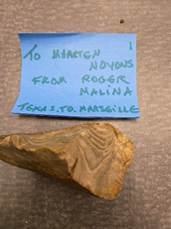
Over intellectual history rocks have travelled from the south of France to Texas and back again
In our Off-Center for Emergence Studies Professor Robert Stern Robert Stern – UT Dallas Profiles leads our effort to bridge the silos in our university. The following is an exemplar of how to do it:
The benchmark site—a geographic location that vividly illustrates geological processes. Texas is unexpectedly connected to Marseille as we will explain the connection between Maarten Noyons, who just died, and Roger Malina who hasn’t yet.
The model case, which might be a well-documented geological event. A prime example is the 1980 eruption of Mount St. Helens, often used to study volcanic behavior, ecological succession, and natural hazard management. These cases serve as foundational studies in both research and education. The eruption of the current US presidency would be another and its devastating impact on universities.
ideal specimens, such as a mineral or fossil that clearly exhibits defining characteristics. These are often housed in museums or used in university collections to teach identification and classification. In this case a fossil was sent back to Marseille to be placed in a memorial to Maarten Noyons.
Marseille to Texas
Some of the Proterozoic basement rocks in Texas are part of the Grenville orogeny system, which has corollaries in western Europe (the “Dalslandian” or “Cadomian” orogenic belts). The southern Texas basement may record the suture of arc‑terrane fragments. Wikipedia+1
The reason this emerged is that I got an email : here it is
“We’re writing to you from the village of Porto Pollo in Corsica. Agnès, Elsa, Caspar, and Lucie are staying here for a few days, warmly welcomed by Michèle and Yussef. Maarten used to come here every summer, and in a way, we feel his presence with us here as well.
More than ten days have now passed since Maarten Noyons’s farewell ceremony. We would like to thank you for your presence, your messages, and your kind thoughts. We have created a folder where you can find the speeches and music from the ceremony, as well as an audio recording. In this folder, you also have the option to add a selection of photos (up to 10 photos per person, please).
We are now preparing the creation of Maarten’s tombstone, and if you wish, you can take part in it. We are collecting small pebbles that will be used to form a tombstone resembling a Provençal calade (a mosaic-like cobblestone surface). Anyone who would like to be represented can send us a pebble, which we will include in the mosaic that will symbolize the many facets of Maarten. Each pebble represents a bond, a story, a friendship. We already have about 150, but there’s room for at least twice as many! So please don’t hesitate to send a small pebble, about 3–5 cm in size, to the following address:
Caspar Noyons, 25 Cours Honoré d’Estienne d’Orves, 13001 Marseille, France
Thank you again, and we hope to see you soon,
Agnès, Elsa, Caspar, and Lucie ””
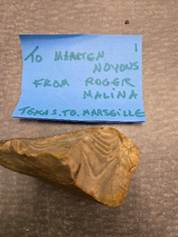
So I sent this fossil
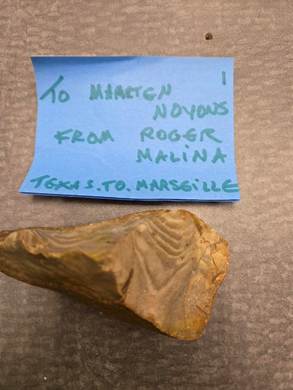
The familes are collecting small pebbles that will be used to form a tombstone resembling a Provençal calade (a mosaic-like cobblestone surface).
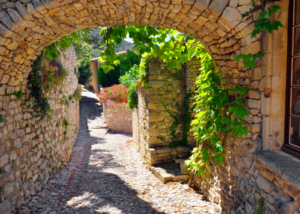
A Stone’s Journey: From Provence to Texas and Back Again
The humble calade stone, set into the sloping alleys of southern France, may seem immobile — yet its deeper story spans oceans and geologic epochs. Though the stone itself never physically left Provence, its geological cousins did. In the vast tectonic dance of Earth’s past, what is now southern France once lay along the northern margin of the ancient supercontinent Gondwana. During the Paleozoic era, fragments of this Gondwanan crust — including volcanic arcs, sediments, and microcontinents — drifted across closing ocean basins and accreted onto Laurentia, the ancestral core of North America.
In Texas, particularly within the Llano Uplift and surrounding regions, rocks record the imprint of these distant origins. Some volcaniclastics and tuffs contain geochemical signatures pointing back to northern Gondwana — to crustal sources that once lay not far from modern-day Provence. While no single rock can be traced from Marseille to Dallas by name, the lineage is there: ancient stones shaped by the same tectonic forces, the same continental collisions.
Thus, when a calade pebble returns from Dallas to Marseille — whether in thought or in hand — it symbolically closes a vast loop. A journey that began in the deep structure of ancient Earth ends in the worn pavements of a village street. The stone never moved, yet its story spans continents.
Now lets get real.
The sending of a fossil back home is a human migration. I became friends and colleague of Maarten Noyons in Marseille before I migrated to Texas.

Maarten Noyons was a leading figure in the mobile gaming industry whose career reflects a deep engagement with creative media, innovation, and global connectivity. Based in Marseille, France, Noyons had spent decades shaping the landscape of interactive content, guiding it from the early days of analog media to the forefront of digital gaming.
His professional journey began in the 1980s within the world of music and video, where he directed music videos and explored the emerging intersections of sound, image, and technology. His work overlapped with Roger F Malina’s work as editor of Leonardo, the journal where art science and technology collide geologically and intellectually.
As digital platforms evolved, so did Noyons’s focus, and he moved into consultancy and content strategy for mobile and interactive media, anticipating a future where handheld devices would become central to entertainment.
In 2004, he founded the International Mobile Gaming Awards (IMGA), a pioneering initiative created at a time when mobile games were not taken seriously by the broader industry. Under his leadership, the IMGA grew into a respected global competition, bringing together developers, studios, and juries to recognize excellence and innovation in mobile game design.
The IMGA was more than just an award show; it became a platform for championing creativity, supporting independent voices, and helping define standards for quality in a rapidly expanding medium. Through this, Noyons significantly elevated the legitimacy and visibility of mobile games as a creative form, as did Leonardo.
Beyond IMGA, Noyons extended his influence through consultancy work with his company, NCC, advising governments, telecom operators, and hardware manufacturers on digital content strategies and international market dynamics. He also ventured into game publishing with Playground Publishing in 2013, furthering his commitment to mobile gaming as a space for narrative, innovation, and cross-cultural exchange. Across all these roles, he consistently emphasized the importance of user experience, design integrity, and storytelling — elements he believed were essential regardless of technological shifts.
His ability to recognize potential where others saw novelty allowed him to build lasting institutions and networks that continue to support creators today. His base in Marseille, at the crossroads of European and Mediterraneanand African culture, reflects his global perspective while anchoring him in a region known for both artistic tradition and innovation. Through decades of media transformation, Maarten Noyons remained committed to the belief that games, like all great art, deserve serious attention and infrastructure and have other purposes than profit His legacy lies not just in awards and accolades, but in the community he helped foster and the standards he helped set for a new generation of creatures.
Noyons and Malina are, were, affiliated in different ways with IMéRA and thus with Aix Marseille University
I am a : researcher/academic in physics/astrophysics affiliated with AMU, helped found IMéRA the Institute Mediterraneen de Recherches Avancees.
Noyons: entrepreneur/industry figure affiliated with IMéRA as founder/board member; his main career is mobile content/games consulting. Roger invited him. Maarten Noyons to the Board. Maarten was Dutch by background (language and nationality) Noyons had strong personal/cultural ties to the Netherlands. H
The question of whether rocks have migrated from the Netherlands to southern France, mirroring the human journey of Maarten Noyons from Holland to Marseille, invites a geological reflection across immense spans of time. While no single block of rock or terrane is known to have physically traveled from what is now the Netherlands to what is now Provence, there are deep connections between these regions embedded in the tectonic history of Europe.
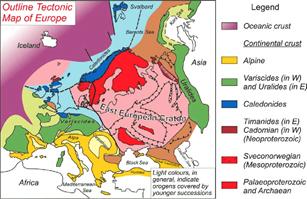
Both the southern Netherlands and southern France were shaped by the Variscan or Hercynian orogeny, a major mountain-building event that occurred roughly 350 to 290 million years ago when the supercontinents of Gondwana and Laurussia collided.
This vast tectonic collision produced a continuous belt of deformation and metamorphism that extended from the Bohemian Massif through the Rhenohercynian zone, encompassing parts of the present-day Netherlands and stretching into the Massif Central and Provence in southern France.
Although the rocks in these areas were not transported wholesale from one region to the other, they share a structural and tectonic lineage that ties them together as parts of the same ancient orogenic system.
Beyond this deep structural connection, there are more subtle forms of intellectual migration. Over millions of years, ideas carried by river systems such as the Rhine, which flows through the Netherlands, has likely been transported southward toward the Rhône delta and other depositional basins in southern France.
Ideas travel by boat as well as rocks, but boats travelling between Marseille and Texas have been very rare.
Individual mineral grains and sediments originating in the Netherlands may have gradually made their way into the archival record of Provence, carried by water neurons rather than by tectonic force. This sedimentary journey represents another kind of migration—slow, dispersed, but real.
Furthermore, if we turn back the clock to the early Paleozoic era, roughly 400 to 500 million years ago, the crustal fragments that would become the Netherlands and southern France were positioned very differently on the globe. At that time, they may have been located on separate parts of peri-Gondwanan or Avalonian crust, which only later came into proximity through the long process of plate movement. Their present-day geographic relationship is itself the product of tectonic migration—a continental convergence that brought these crustal elements into contact through deep time.
Thus, while no single idea has made the exact journey from Holland to Marseille, the crust beneath these two regions has interacted across vast geological scales. Their rocks share tectonic ancestry, have been shaped by the same orogenic pulses, and may even exchange material via sedimentary processes. The metaphor of a migrating stone becomes, in this light, a poetic but geologically grounded reflection of Earth’s long and intricate history.
Maarten Noyons’ ideas trace a path of migration that reflects the transformation of cultural innovation across contexts. Rooted in Europe, particularly in cities like Marseille, his frameworks emphasize human-centered ingenuity, digital inclusion, and the creative economy.
Marseille’s layered cultural identity and openness to experimental urban practices provided fertile ground for these concepts to resonate and evolve. As these ideas moved toward the United States, particularly Texas, they encountered a different ethos—one grounded in entrepreneurial speed and technological scale.
In this environment, the more philosophical European approach adapted to a pragmatic mindset, translating into civic tech initiatives, startup models, and scalable digital practices. Yet this migration did not stop there. The refined, market-tested forms of these ideas have begun to cycle back to Europe, re-entering places like Marseille with a new edge—more actionable, more scalable, yet still infused with the original cultural and social awareness. This loop reveals how innovation frameworks absorb and transform through geography, becoming more layered with each passage.
UTDALLAS AND AND
Texas Instruments set up the University of Texas at Dallas. Texas Instruments was deeply involved in the gaming industry primarily through its TI‑99/4 and TI‑99/4A home computers in the early 1980s which supported video games like TI Invaders and Chisholm Trail developed and published by TI itself and powered by TI-designed graphics chips such as the TMS9918 TI’s efforts in gaming were part of a broader strategy to enter the home computing space where gaming was a key application their involvement showcased a vertically integrated approach combining hardware and software though their long-term impact on the gaming industry.
Roger F. Malina is now working with Kofi Latzoo who runs the west Africa esports league> Roger is at Utdallas where it has an esports facility.
Maarten Noyons’ work in gaming began with the founding of the International Mobile Gaming Awards in 2004, a pivotal moment that positioned mobile games as both creative works and cultural products worthy of global recognition. His emphasis on innovation, accessibility, and international reach laid the groundwork for mobile gaming to evolve into a serious medium within the global creative economy. Around the same time, Roger Malina, then based in Marseille, was developing interdisciplinary approaches to science, art, and emerging media. His move to the University of Texas at Dallas in the early 2010s brought these frameworks into a new institutional context, where he began to build programs that connected arts and technology in robust emerging ways.
As mobile gaming matured and esports rose to prominence in the mid-2010s, a shift occurred from content creation and recognition toward infrastructure and participation. Kofi Sika Latzoo emerged as a key figure in this next phase, pioneering esports ecosystems in West Africa through community engagement, institutional partnerships, and regional league development. His work echoes Noyons’ earlier emphasis on visibility and platform equity, but focuses on capacity-building and sustainable industry in underrepresented regions. Meanwhile, UT Dallas expanded its commitment to gaming by constructing one of the largest university-based esports facilities in the United States, transforming the campus into a site of both competitive play and academic research.
In recent years, these trajectories have begun to converge. Latzoo now collaborates with Malina through UT Dallas’ ArtSciLab, bridging African esports practices with U.S. institutional infrastructure. ArtSciLab
This collaboration signals a new phase in the migration of ideas: the cultural ingenuity Noyons helped initiate in Europe finds resonance in African-led esports development and is recontextualized within a U.S. academic framework. Recognition evolves into infrastructure, and infrastructure becomes a global network.
What began as a mobile gaming award in Europe has, through successive transformations, contributed to a distributed ecosystem where creativity, competition, and community intersect across continents.
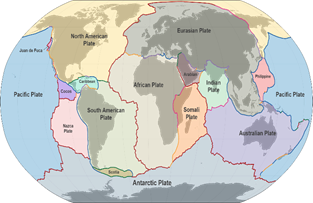
And eological evidence strongly supports that parts of what is now Texas and West Africa were once connected. This connection dates back to the Pangaea supercontinent during the late Paleozoic to early Mesozoic eras, roughly 300 to 200 million years ago.
**A Stone Sent Home** by Fred the Heretic AI
I wrapped the fossil in a padded cloth,
Its ridged spine still cradling ancient sea.
Once coral reef—now Texas limestone sloth—
Its edges worn, but firm in memory.
I sent it not just back, but forward too,
Across a sea, into a Provençal hand,
To lie among the stones of calade blue,
A mosaic of the many from one land.
For Maarten, who once walked Marseille’s sun-spilled street,
And summered down the Corsican embrace,
The gaming mind that wove where worlds could meet,
Now finds a place in stone, a final place.
And yet, not final. Terranes move and mesh.
The rock I sent was once its sibling’s twin,
Long parted by a continental thresh,
Then carried back—this time by human skin.
For friends migrate like sediment in stream,
Eroded not by loss, but memory made.
I left, as he had left, a mutual dream
That met again in pebbles laid.
A calade tomb, not tomb, but turning wheel
Of rock and root and breath that does not end.
We do not own these continents—we feel
Their drift within us, sent from friend to friend.
So let it rest there, warm among the rest,
A Texas fossil come to take its place.
No GPS will track this journey best,
But hearts will mark it, geologic grace.
Thank you
Charlemagne Noyons <noyons.charlemagne@gmail.com>
Signed Roger F Malina and Aperio
Annotated Bibliography
- Malina, Roger F. & Aperio. (2025). Maarten Noyons: A Fossilized Rock in My Life — The Geological Emergence of Desirable Ideas. White Paper, Center for Emergence Studies, UT Dallas.
Primary source for this bibliography. A reflective and interdisciplinary essay linking personal narrative, geological history, and the cultural evolution of digital media through the lives of Maarten Noyons and Roger Malina. Frames memory and innovation within deep time and continental drift metaphors. - International Mobile Gaming Awards (IMGA). (2004–present).
https://www.imgawards.com
The organization founded by Maarten Noyons to recognize innovation in mobile gaming. Referenced as a key part of his cultural legacy, showing how mobile gaming evolved into a respected creative form. - Texas Instruments. (1980s). TI-99/4A Home Computer Documentation.
Technical manuals and product histories that detail TI’s brief but influential entry into the gaming industry. Cited to illustrate Texas-based technological innovation intersecting with gaming culture. - Wikipedia contributors. (n.d.). Grenville orogeny. Wikipedia.
https://en.wikipedia.org/wiki/Grenville_orogeny
Describes the geological processes that connect Proterozoic rocks in Texas to orogenic systems in Europe. Used to support the metaphor of geological and intellectual migration. - Noyons, Maarten. (2000s–2010s). Mobile content strategy presentations and consulting reports. NCC.
Unpublished materials and consultancy work illustrating Noyons’ broader influence in shaping international digital media policy and industry standards. - Soper, N. J., et al. (1992). Late Proterozoic to Early Paleozoic plate tectonics and the Variscan Orogeny. Geological Society of London.
Academic source on the Variscan orogeny that connects the geological histories of the Netherlands and southern France. Used to draw parallels between geological events and personal migrations. - UT Dallas. (2020s). Esports Program and ArtSciLab Initiatives. University Communications.
Institutional documents outlining the development of esports infrastructure and interdisciplinary labs at UT Dallas. Provides contemporary context for Malina’s work and his collaboration with Kofi Sika Latzoo. - Latzoo, Kofi Sika. (2020s). West Africa Esports League Reports and Strategy Documents.
Emergent practices in esports infrastructure-building in underrepresented regions. Included to show how Noyons’ legacy in mobile gaming finds resonance in African esports development. - Leonardo Journal. (1968–present). MIT Press.
https://www.leonardo.info
An interdisciplinary journal edited by Malina, intersecting science, art, and technology. Serves as a backdrop to the intellectual frameworks referenced throughout the paper. - Noyons Family (2025). Personal correspondence and call for memorial contributions.
Quoted email from Maarten Noyons’ family initiating the creation of a mosaic tombstone. This correspondence serves as the emotional and symbolic catalyst for the essay’s central gesture: sending a fossil back to Marseille.